
Mangrove Restoration Bulletin: Quarterly updates from the ground Q1 2026
May 5, 2026 /General
An early win for restoration! Wildlife is moving in
Over the past three years, our work as part of the Mastercard Priceless Planet Coalition has focused on a fundamental goal: restoring mangroves that can survive and grow. But restoration does not stop at planting trees. A healthy mangrove ecosystem is defined not only by vegetation, but by the life it supports.
This quarter marks an important shift in how we measure success, with the completion of the first mangrove bird baseline at our two mangrove restoration sites in Umm Al Quwain.
Looking beyond survival
Until now, our monitoring has focused on what we call verification: tracking survival rates, tree growth and overall site health. These indicators remain essential - they tell us whether restoration efforts are technically working.
But survival alone does not mean an ecosystem is functioning.
To understand whether our sites are evolving into real habitats, we have been expanding our monitoring approach to include biodiversity indicators from gastropods and crabs to bats and birds. We have recently been looking at data from our first bird counts in Umm Al Quwain.
Introducing bird surveys
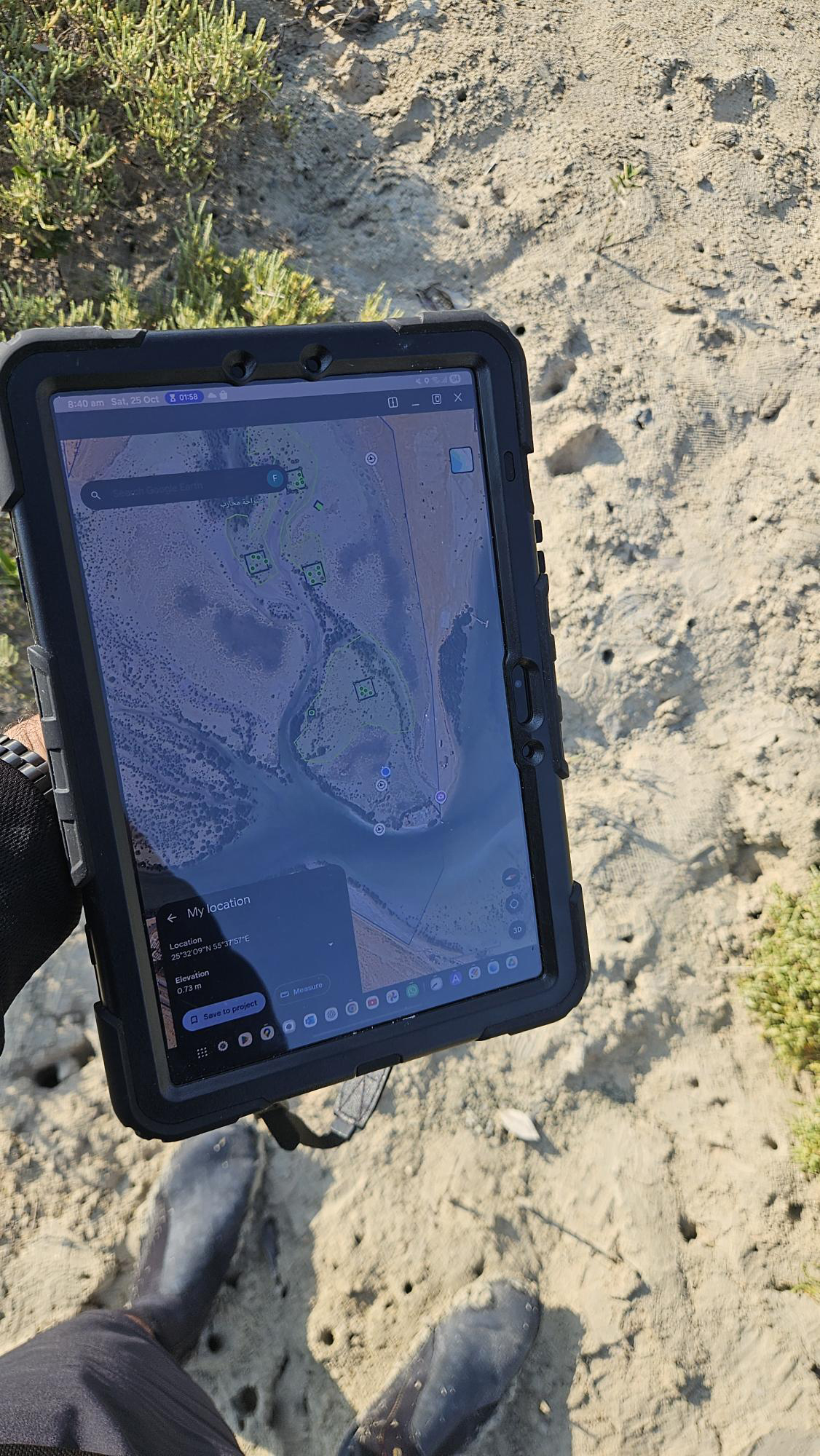
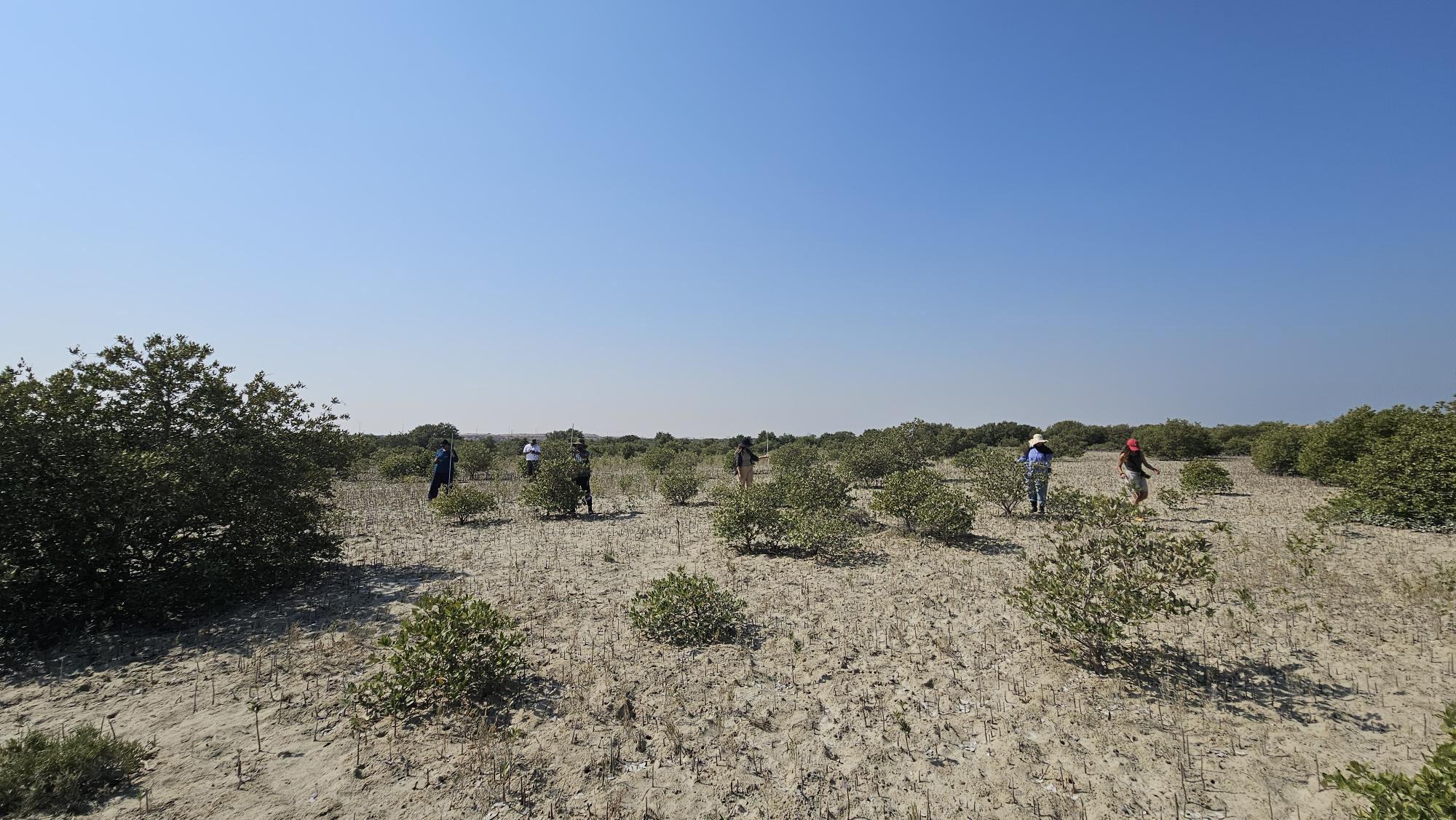
Over three mornings in October 2025, we conducted 14 structured bird surveys across our restoration sites, combining the efforts of technical teams and 11 citizen scientists, i.e. volunteers who assist scientists in the field (such as youth, Leaders of Change volunteers, university students and community members). These surveys were designed to capture a simple but powerful signal: is wildlife starting to use these restored areas?
This quarter, we completed the first analysis of that data.
At our Umm Al Quwain site, in just 140 minutes of observation, teams recorded 153 individual birds within and next to our restored areas, representing 8 species, including shorebirds, gulls, and terns. In other words, the kinds of waterbirds you would expect in a healthy mangrove-mudflat-channel system.
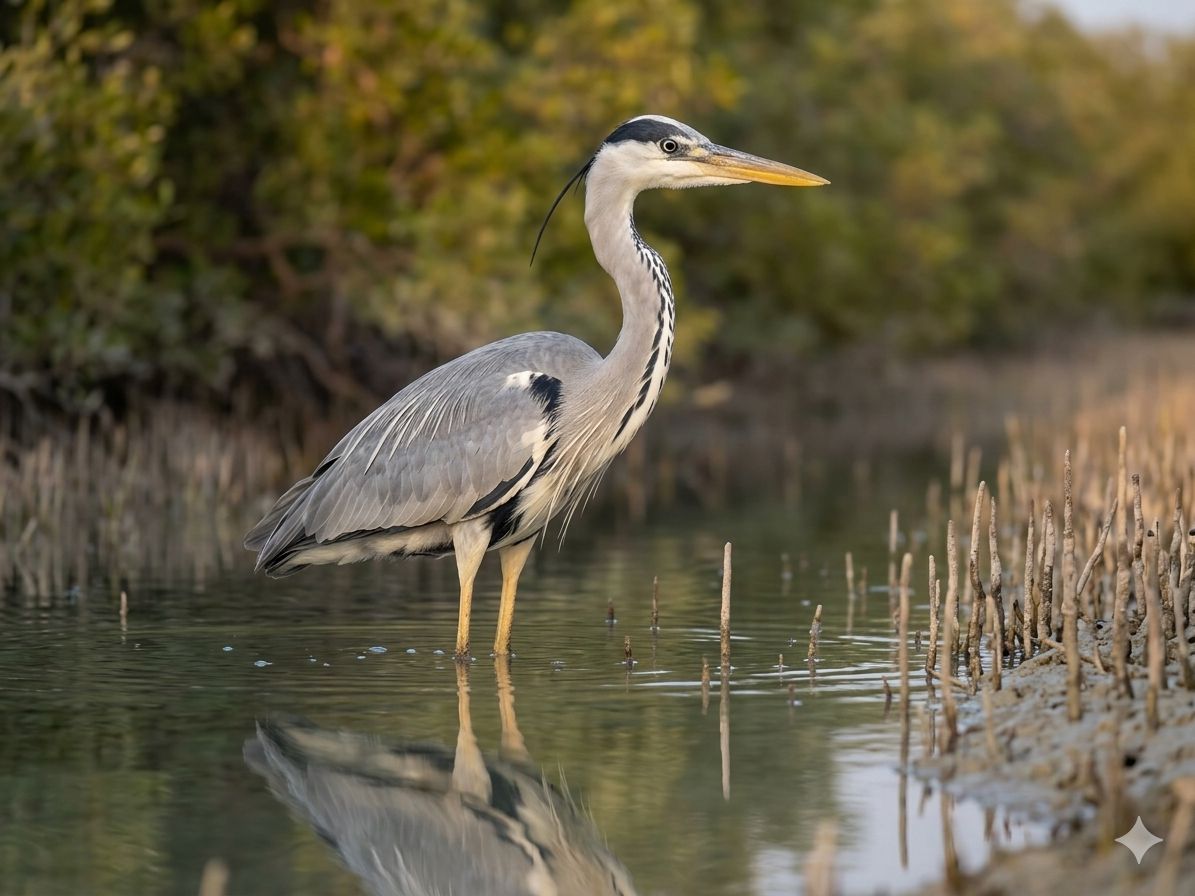
Among them were Grey Herons - a key indicator species.
Why Grey Herons matter
Grey Herons are patient hunters. They stand motionless at the water’s edge before striking fish and crabs. Their presence is not random - they are drawn to environments that provide both shelter and reliable access to prey.
In our surveys, Grey Herons were observed feeding and resting within the restored mangrove area.
This is a significant signal.
It suggests that the site is no longer just a plantation of young trees, but is beginning to provide the ecological functions needed to support wildlife. Birds aren’t just passing through. They are using the habitat to rest and roost (i.e. to settle safely in the shelter of the trees) as well as to forage for food.
The mangrove stand itself is quieter than its edges and surrounding mudflats. Data indicates that 74% of birds were recorded along mangrove edges or on open mudflats, while only 11% were found inside the mangroves. This suggests that the interface between habitats is where the ecological activity takes place; the restoration's value to birds is thus the habitat mosaic it sits in, not just the trees.
From planting trees to restoring ecosystems
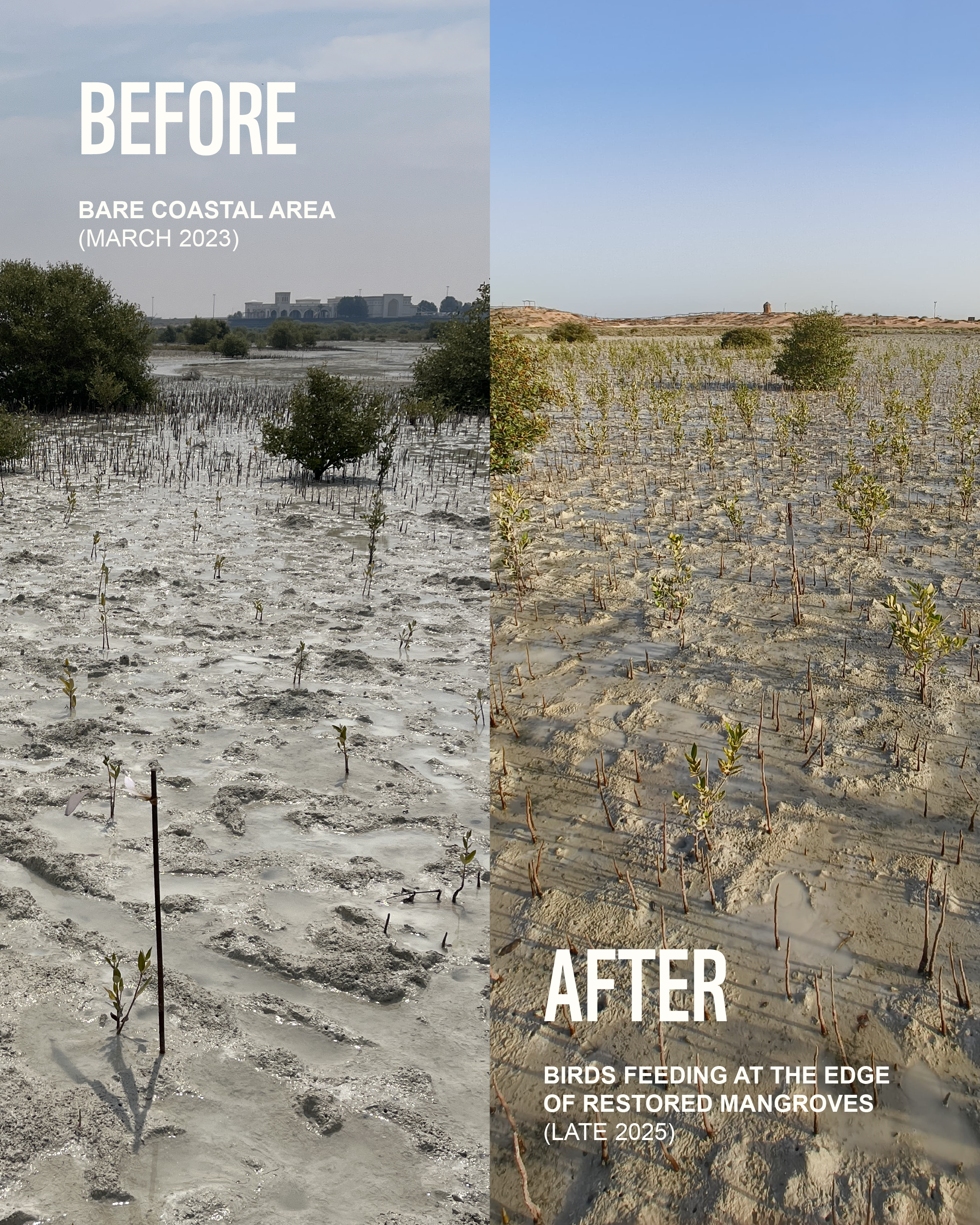
To illustrate this transformation, we look at the same location over time.
In March 2023, the site was a bare coastal area - a blank starting point for restoration. By late 2025, the same area shows developing mangroves, now up to 80 cm tall, with birds actively feeding among them.
While we do not have bird survey data from before planting began, early signs suggest that birds are beginning to use the restored area itself - not just the wider landscape - which is what we would hope to see at this stage.
Surveys recorded the presence of a single Socotra Cormorant, a vulnerable species which is endemic to the Gulf region. Bee-eaters were also observed directly at the site, the only species recorded as actively preferring the planted mangroves.
These findings establish an important benchmark and reference point. Repeating the same surveys at Years 2.5 and 5, from the same vantage points, will help show how the bird community responds as the mangroves continue to mature.
What we are learning
This quarter reinforces a key lesson:
● Counting trees tells us if restoration is working.
● Counting wildlife tells us if the ecosystem is functioning
Both are necessary - but the second is what defines long-term success.
A new phase of monitoring
Our monitoring framework is evolving accordingly:
● Verification - Are the trees surviving and growing?
● Integrity - Is the site becoming a functioning habitat?
● Prosperity - What value is the ecosystem creating? Is it removing carbon from the air and storing it within its biomass? Are fisheries recovering? Is the shoreline better protected against flooding and storm surge?
Q1 2026 marks our first step into this second phase: integrity monitoring.
Looking ahead
The arrival of wildlife at our restoration sites is an encouraging milestone and a testament to the collective efforts of our teams, partners and community members. It signals that these ecosystems are showing early signs of recovery and enhanced natural functions.
In the coming months, we will continue to monitor how biodiversity returns and how conservation efforts strengthen the resilience and value of restored mangrove ecosystems. We also invite you to be part of this journey as a citizen scientist. Keep an eye out for upcoming community volunteering events and join us in the field.